Cornbelt Conversations
From Nebraska to Ohio, King Corn dominated the landscape of my ride through the country’s heartland. Corn (and soybeans) covered the land with a healthy-looking, verdant blanket. But looks are deceptive.
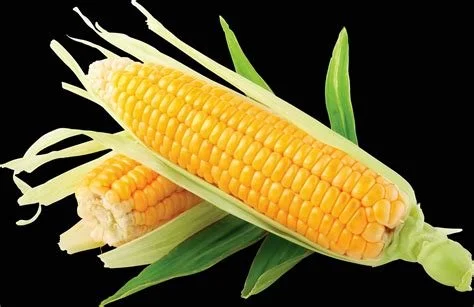
We grow a lot of corn in the United States; in fact, three times as much today than we did fifty years ago. In 2024, over $66.4 billion dollars of corn was sold in the USA, making it the single largest crop in the country — 96 million acres of monoculture. Much of this increase can be traced back to the farm policy under Richard Nixon’s brash (and bigoted) Secretary of Agriculture, Earl Butz. Farmers were instructed to “get big or get out” and encouraged to plant corn “fence row to fence row.” Part of Butz’s new policy replaced the old where farmers were paid to keep land fallow and instead used subsidies to shield farmers from a drop in prices when supply exceeded demand and (thus creating a perverse incentive where farmers overproduced because it gave them more subsidy dollars). This new surplus of cheap abundant corn needed new markets, which led to the rise of corn syrup to sweeten our drinks, corn-fed beef operations to fatten our cattle, and more recently, ethanol to reduce environmental harm (that is, if you ignore the significant fossil fuel inputs required to produce the corn in the first place).
Butz also helped accelerate the rise of “agribusiness,” with its cost-conscious, centralized seed-to-processing network (which increasingly squeezed the small farmer-growers caught in the middle of this capital-intensive remaking). Butz’s push for higher yields effectively flipped the New Deal’s Soil Conservation Service mandate to protect the soil on its head. To increase yields, farmers became more dependent on herbicides, pesticides, and petrochemical fertilizers, a combo in which the planted corn, to this day, essentially marinates.

The green Midwestern carpet.
Corn farming “got big,” alright. So big that it is choking the rivers with nitrate that threaten safe drinking water that has been linked to Iowa’s increasing cancer rates (it has the second highest rate of new cancer cases in the country). So big that it has squeezed farmers who can’t afford to continually buy new hybrid seeds and petrochemicals to meet the yields required to pay off their bank loans. So big that the path to return to a high-tech version of the self-reliant, independent farmers of old (the very ones who rotated diverse crops and left land fallow to maintain soil nutrients) is lost in the fog of money and influence.
As agribusinesses became a dominant force in this now-industrialized rural landscape, rural voting patterns shifted toward political conservatism. Among the factors responsible for this outcome are a changing media landscape, the Democratic party’s neglect, and a barrage of focus group-tested messages about immigrants, food stamps, and welfare queens (a veritable sideshow that distracts citizens from the issues that hit closer to home such as soil depletion, poor water quality, and high cancer rates).

On an Illinois county road: Soybeans to the left of me, corn to the right, here I am…
Such was the social, political, and economic backdrop in Iowa the day I crossed the Missouri River and began riding through its glaciated countryside. Appropriately, it was the day of my first high-fructose corn syrup bonk that I related in my previous blog post. (What is it about corn syrup and Iowa? Like Sauron’s Ring of Power, does corn syrup’s energy bonk become more pronounced if eaten closer to where it was grown?)
Later that afternoon I took a breather outside of a gas station convenience store in Dow City (named after its first settler in 1855, Judge S.E. Dow, not the petrochemical company). I was gearing up to climb into the rolling hills to the east when a short, stocky man with lively blue eyes approached me and began asking questions about my ride. He soon began regaling me with stories about the area’s history (such as during Prohibition, mobsters from Chicago would decamp to the small, rural towns to hide from the trouble they had made). He told me he was a livestock consultant, and that he had lived and worked in Central and South America helping set up beef farms. It was just a friendly conversation with a stranger at a gas station in a small town in Iowa.
Suddenly, as if he made some internal, mental leap, he blurted, “You know, we’re going to have to fight these guys. There’s going to be a war.”
“War with whom?” I asked.
“You know,” he replied, “those guys in the Middle East… the Emirates and the Gulf countries.”
I looked at him quizzically. He continued, “Yeah, you know, Obama gave them billions of dollars in aid, and you can bet they didn’t spend it on food. They bought weapons.”
This jovial, story-telling stranger was now going full reactionary on me. He was on a roll.
“Yeah, they bring in 10,000 people a day illegally and give them the right to vote. If I were to move to Mexico, they wouldn’t allow me to vote.”
I had no idea what had just happened. Maybe it was the dark side of the corn syrup.
“I know what these countries are like,” he continued. “If all these people like communism or socialism so much, hell, I will buy them a ticket! They can leave if they don’t like it here.”
I graciously excused myself and continued riding on my overheated way.
I didn’t give the conversation second thought until the morning eight days later in Wyoming, Illinois, as I was preparing to leave. We were parked in a wide alley near the old CB&Q railroad depot at the town’s eastern edge. A man ambled up to me and, after exchanging pleasantries and fielding questions about my journey, invited me into the depot, which had been recently converted into a museum, to give me a tour. He was a retired farmer and high school wrestling coach and now volunteered his time at the museum. He showed me the 19th century furniture, ticket counter, and even an old horse-pulled coach. Truthfully, I cared less about the artifacts than learning about him. When I asked, he told me that he grew corn, and that about half of it was shipped to China while the other half was fermented and converted into ethanol. He also corroborated what I learned in Nebraska about the high-cost barriers that farmers endure (for example, the price of a new combine ranges between $400,000 and a million dollars). Who can manage such debt, along with the cost of seeds, fertilizers, pesticides, and herbicides needed to keep yields high? Only big operators can, which is why farm consolidation has been on the rise since the 1980s (per the USDA, the percentage of large farms operating cropland – those with more than 2,000 acres – rose from 15% in 1987 to 41% in 2017).
As we walked out of the depot, I thanked my guide for the tour. Before we parted he said, “This is a great country. It’s too bad that not everyone recognizes that.” Just like my conversation with the reactionary livestock consultant in Iowa, he changed the course and tenor of the conversation abruptly (though he thankfully did not spew an apocalyptical forecast of war). But there was something wistful about his tone. Perhaps a conversation with a total stranger encouraged him to speak from his heart, albeit vaguely. I stayed on safe ground and replied that it was shameful the country was so polarized, and how we needed more civil dialogue. He did not engage any further.

Art Cullen is a clear-eyed Pulitzer Prize winning journalist from a small-town newspaper in northwest Iowa. Looking back at the changes to the corn belt that occurred in his lifetime, he writes:
“Everything got bigger. Farms. Machinery. Trucks. Livestock herds. Houses on the lake for doctors and ag financiers. Everything but the rural working person’s bank account. Profits that used to be held by more diverse family farms flowed to bigger corporate operations backed by real capital. The rest of us became hired help.”*
We associate economic disruption with the “move fast and break things” approach espoused by Facebook and other tech companies. Less obvious in popular culture is the disruption suffered by farmers and rural America in general. Were my conversations two distinct responses to the economic disruption in the corn belt? The livestock consultant revealed himself as one readily distracted by the culture-war messages uttered by politicians-for-hire and amplified by Fox News. My railroad depot guide just seemed sad.
Though I was riding across the country during a drought, I sensed there was, in parallel, something parched inside the people I met, thirsting to make sense of what was happening to themselves, their towns, and their country. Like many others I encountered on the trek, these two gentlemen just wanted to connect and be heard. The pandemic and political events had accelerated the pace of change and strained the social fabric of the country. We Americans, I sensed, were uneasy, tense, and frayed.
Historically, certain groups (Native Americans, Blacks, and the indigent) have always been on the outside looking in at the grand American drama of progress and wealth. Have White farmers and corn-belt denizens now joined their ranks? The evidence suggests so.
*You can read more Art Cullen on Substack or buy his book, “Dear Marty, We Crapped In Our Nest.”